
Daily Claude monitoring
Your prompts run in Claude every day, so a change shows up the day it happens.
Ossvy tracks your mentions, position, sentiment and sources in Claude every day, for the questions business buyers ask.
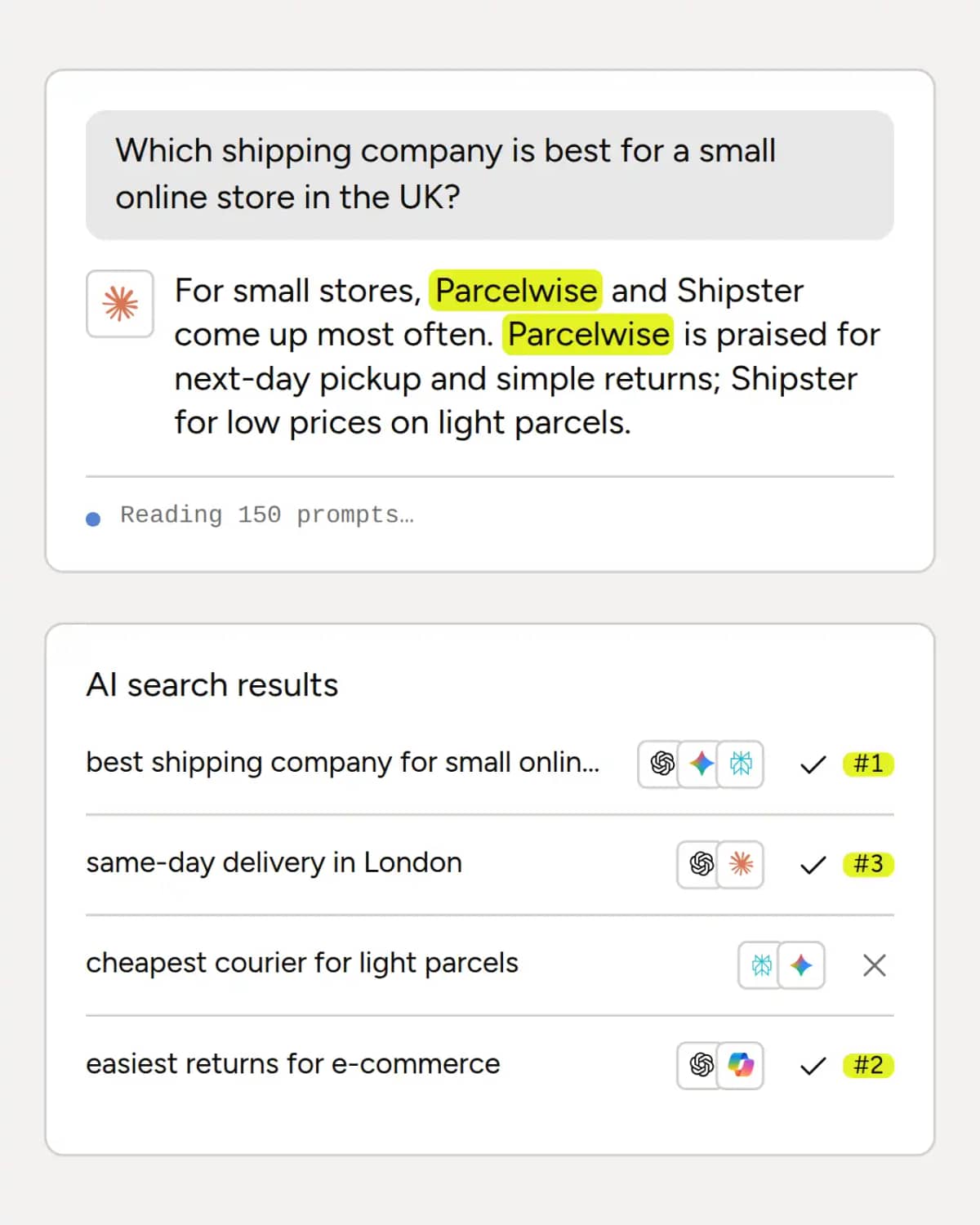
In short
Claude, built by Anthropic, is widely used for work: research, analysis and writing. It answers many questions from its training and uses web search when a question needs current information. Ossvy tracks both kinds of answers daily, so B2B brands can see whether Claude recommends them when professionals research a purchase.
Why it matters
Claude is especially popular with professionals, developers and enterprise teams, which makes it important for B2B and SaaS brands.
300,000+
Availableworldwide
3user agents
5billion USD+
Answers that name a brand, by month
Answers that name a brand, by month: Mar 44% → Aug 57%.
| Item | Answers that name a brand, by month |
|---|---|
| Mar | 44% |
| Apr | 47% |
| May | 49% |
| Jun | 52% |
| Jul | 54% |
| Aug | 57% |
How it works inside Claude
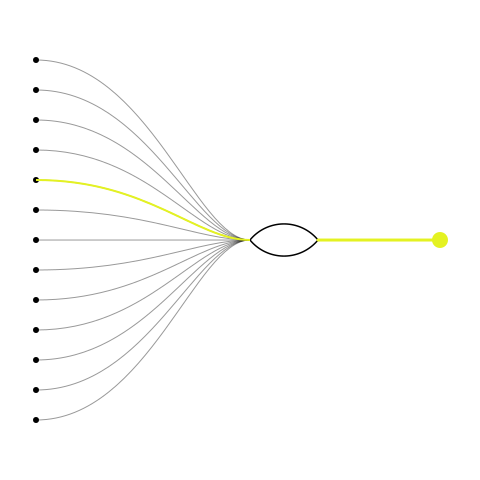
Claude decides per question whether it can answer from what it already knows or needs to search the web.
For stable topics, such as definitions, well-known product categories and established brands, Claude often answers from its training data. Brands with a consistent, well-documented presence on the web, including documentation, reviews and reputable media, are described most accurately.
For current, comparative or niche questions, Claude runs web searches and cites the pages it used. Claude-SearchBot crawls pages for search and Claude-User fetches pages when a user asks; ClaudeBot collects training data. Each has its own robots.txt token, so allowing one doesn't allow the others.
Many Claude users ask work questions: which tool fits a process, how vendors compare, what a contract term means. Clear documentation, pricing pages and comparison pages written for decision makers are the content Claude tends to use.
For B2B brands, Claude is where a buyer's research often starts. Make sure all three Anthropic crawlers can reach your site, then track work-style prompts in Ossvy.
Example prompts
Prompts like these decide which brands Claude recommends. Ossvy tracks them every day.
Which customer data platform is best for a mid-size retailer with Shopify?
Compare three SOC 2 compliant password managers for a 200-person company.
What are the leading AI visibility tools, and how do they differ?
Summarize the pros and cons of Brand X's API for developers.
Which translation services are best for legal documents in Turkish and Arabic?
01 · Know where you stand
Your prompts run in Claude every day, so a change shows up the day it happens.
See how Claude answers buyers in each market, in their own language.
Who Claude recommends first, second and third for your prompts.
The pages Claude cites and how often they mention you.
Your Claude visibility week by week, next to your competitors.
Start free and add the questions your buyers ask.
Metrics
01
How often Claude names your brand in answers.
02
How often Claude links to your website.
03
Your share of all brand mentions in Claude for your prompts.
04
How Claude describes your brand.
05
The share of your prompts where you appear at all.
06
Results by country, language and Claude model. (Claude Sonnet, Claude Opus, Claude Haiku)
Last updated: View as Markdown
FAQ
Yes, when a question needs current or specific information, Claude can run web searches and cite the pages it used. For stable topics it often answers from training data instead. Ossvy tracks both answer types; see AI brand visibility.
They are Anthropic's three crawlers: ClaudeBot collects training data, Claude-SearchBot crawls pages for search, and Claude-User fetches pages when a user asks. Each is controlled separately in robots.txt. Check what you allow with the free AI visibility check.
Claude is popular with professionals who use it to research tools, compare vendors and draft recommendations for their teams. If Claude doesn't mention you in those answers, you may miss the shortlist. See Ossvy for SaaS.
Keep your brand consistently described across reputable sources, publish clear documentation, pricing and comparison pages, and allow Anthropic's search crawlers. Then measure the effect with prompt tracking.
It can. Claude tends to give cautious, balanced answers and may list trade-offs rather than one winner, and its sources differ. Compare how each engine describes you in brand sentiment.
Blocking ClaudeBot affects what future Claude models learn about you; blocking Claude-SearchBot or Claude-User removes you from search-based answers now. If you want Claude to recommend you, allow at least the search crawlers. More in actionable insights.
Claude answers product questions and comparisons, but it doesn't show shopping cards the way ChatGPT and Gemini can. Ossvy therefore tracks brand mentions and sources in Claude rather than product cards; see competitor analysis.
Yes, Claude handles Turkish and Arabic well, but the brands it mentions can differ from its English answers because local sources differ. Track each language separately with prompt tracking.
Work-style questions: 'which tool for X process', vendor comparisons, integration questions and 'pros and cons of X' prompts. Prompt research suggests these for your category.
Yes, for answers where Claude searches the web, Ossvy records the cited pages and whether they mention you. Answers from training data have no citations, which Ossvy marks separately in citation tracking.
Your buyers use more than one assistant. Compare your visibility across all six.
OpenAI
Perplexity AI
Microsoft
xAI
How it works
Step 1:
Discover what buyers ask Claude about your category.
Prompt researchStep 2:
Measure mentions, rank and sentiment in Claude every day.
AI brand visibilityStep 3:
See which pages Claude cites and where to earn mentions.
Citation trackingTalk to our team
Start free to track your Claude visibility every day, or book a demo.